

The Market in Front of Us Isn’t the Whole Story
It’s easy to understand why so much of the real estate conversation feels focused on the present.
Mortgage rates are higher. Monthly payments matter more. Buyers are watching inventory and price reductions closely, while sellers are trying to understand why some homes move quickly and others sit.
Those are real concerns. But they’re also only one part of the picture.
Real estate is a long-term decision being made in a market that changes week by week. When buyers become too focused on today’s rate, this month’s inventory, or whether prices might soften slightly, they can lose sight of the larger question:
What could this property—and the neighborhood around it—become over the next five, 10, or 15 years?
The region is still evolving
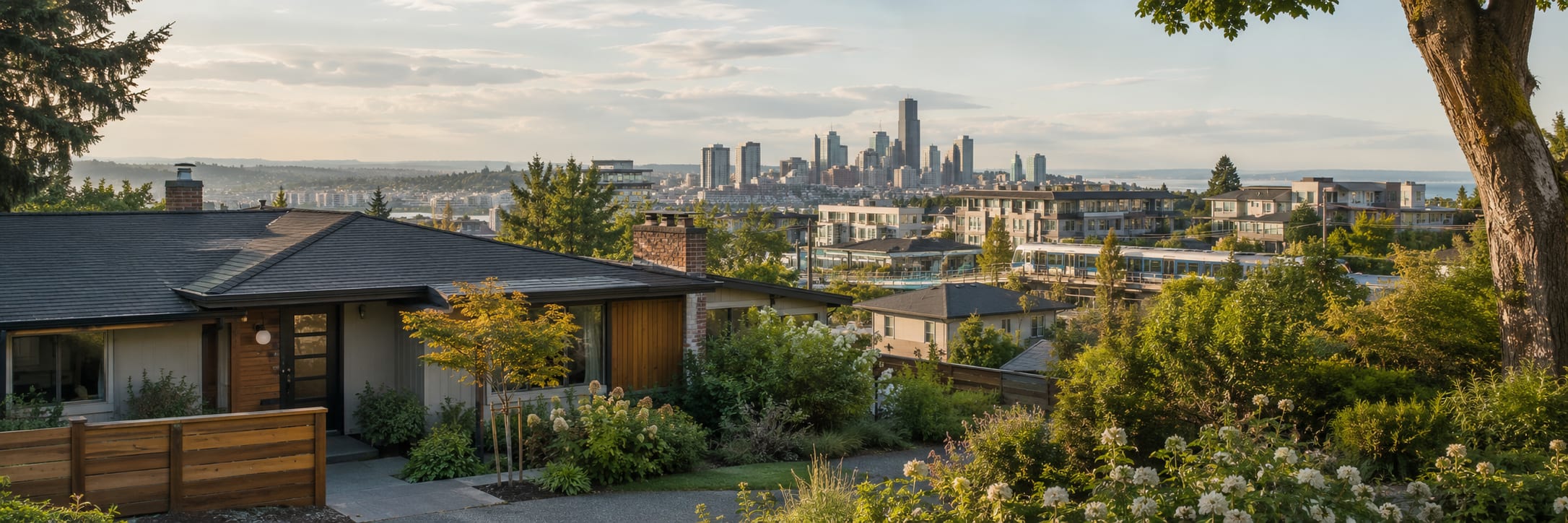
Seattle and the Eastside are not static markets. Population growth, transit expansion, housing policy, and redevelopment continue to reshape how land can be used and where people want to live.
Seattle’s ADU reforms have already made additional living and rental spaces far more common. State housing laws are allowing more middle housing in areas that were traditionally reserved for a single detached home. On the Eastside, light rail and long-term planning are changing areas such as BelRed, the Spring District, and East Main.
These changes don’t transform every property overnight. But over time, they can influence how neighborhoods develop, how buyers value location, and what an individual property may be able to support.
A home that appears ordinary today may sit on land that becomes increasingly valuable because of its location, zoning, lot characteristics, or ability to adapt.
The best opportunity may not be the prettiest house
In a market with more choices, buyers naturally compare finishes. The renovated kitchen, newer flooring, and styled interior are easy to evaluate because their value is visible.
Long-term potential is less obvious.
A dated home on a usable lot may offer room to expand, add an ADU, create multigenerational living, generate future rental income, or benefit from changing zoning. A smaller home near transit or a growing employment center may have more long-term relevance than a larger home in a location with fewer future demand drivers.
That doesn’t mean every buyer should take on a project. It means cosmetic appeal and long-term value are not always the same thing.
Paint and countertops can be changed. Location, land, access, and much of a property’s underlying flexibility cannot.
Today’s payment still matters
Looking ahead does not mean ignoring affordability. A property only makes sense if the payment is manageable and the home fits your life.
But affordability should be treated as a boundary—not the entire strategy.
Mortgage rates can change during the years someone owns a home. A loan may eventually be refinanced if conditions improve. A neighborhood can gain new transportation, businesses, housing, and amenities. A property may also serve a different purpose as a household changes.
The purchase price matters, but so does what you are buying beneath it: land, location, legal flexibility, and the ability to adapt.
Markets rarely feel comfortable at the moment of opportunity
When rates were exceptionally low, buyers faced intense competition, rapid decisions, and limited negotiating power. Today, financing is more expensive, but buyers often have more time to compare properties, conduct due diligence, and negotiate terms.
Every market asks buyers to accept a different trade-off.
Waiting for a market with low rates, lower prices, plenty of inventory, and little competition sounds appealing. Historically, however, those conditions rarely arrive together. When one challenge improves, another usually appears.
The better question isn’t, “When will everything feel perfect?”
It’s, “Which of today’s trade-offs can I manage in exchange for something that may be difficult to find later?”
Think beyond the next six months
No one can guarantee what a particular home will be worth in the future. Not every zoning change creates an immediate gain, and not every neighborhood evolves at the same pace.
That is why forward-thinking real estate decisions require more than a market forecast. They require looking carefully at the individual property:
- Is the lot usable and relatively easy to develop?
- Does the zoning allow—or appear likely to allow—more flexibility?
- Is the home near expanding transit, employment, or neighborhood amenities?
- Could the property adapt to a future need?
- Are you paying primarily for finishes, or for something more difficult to recreate?
The goal isn’t to predict the market perfectly. It’s to buy something with more than one way to work for you.
The current market deserves attention, but it shouldn’t define your entire perspective. Rates will change. Inventory will rise and fall. Headlines will move on.
The properties with lasting value are often the ones that remain useful through all of it.