


Washington Housing Market Seasonality: What the Data Shows in 2026
If you're thinking about buying or selling a home in Washington, timing can make a difference. The housing market tends to follow a predictable rhythm throughout the year.
By looking at several years of Northwest MLS data along with the most recent 2026 market update, we can clearly see patterns in inventory, sale prices, and how quickly homes sell. Understanding these seasonal trends can help buyers, sellers, and investors make smarter decisions about when to enter the market.
Washington’s Seasonal Housing Market Rhythm
The housing market across Washington generally follows a consistent seasonal cycle:
-
Inventory rises during the spring market
-
Prices tend to peak in late spring or early summer
-
Homes sell the fastest during spring and early summer
-
Activity slows in the fall and winter months
Recent market data shows that inventory has been expanding again as we move into the 2026 spring market, giving buyers more options than they’ve seen in recent years. At the same time, buyer activity remains steady and prices have remained relatively stable.
Understanding how these trends repeat each year can give buyers and sellers an advantage when planning their next move.
Three-Year Market Trends
Looking at three years of housing data helps illustrate how the market typically moves throughout the year.
Homes for Sale
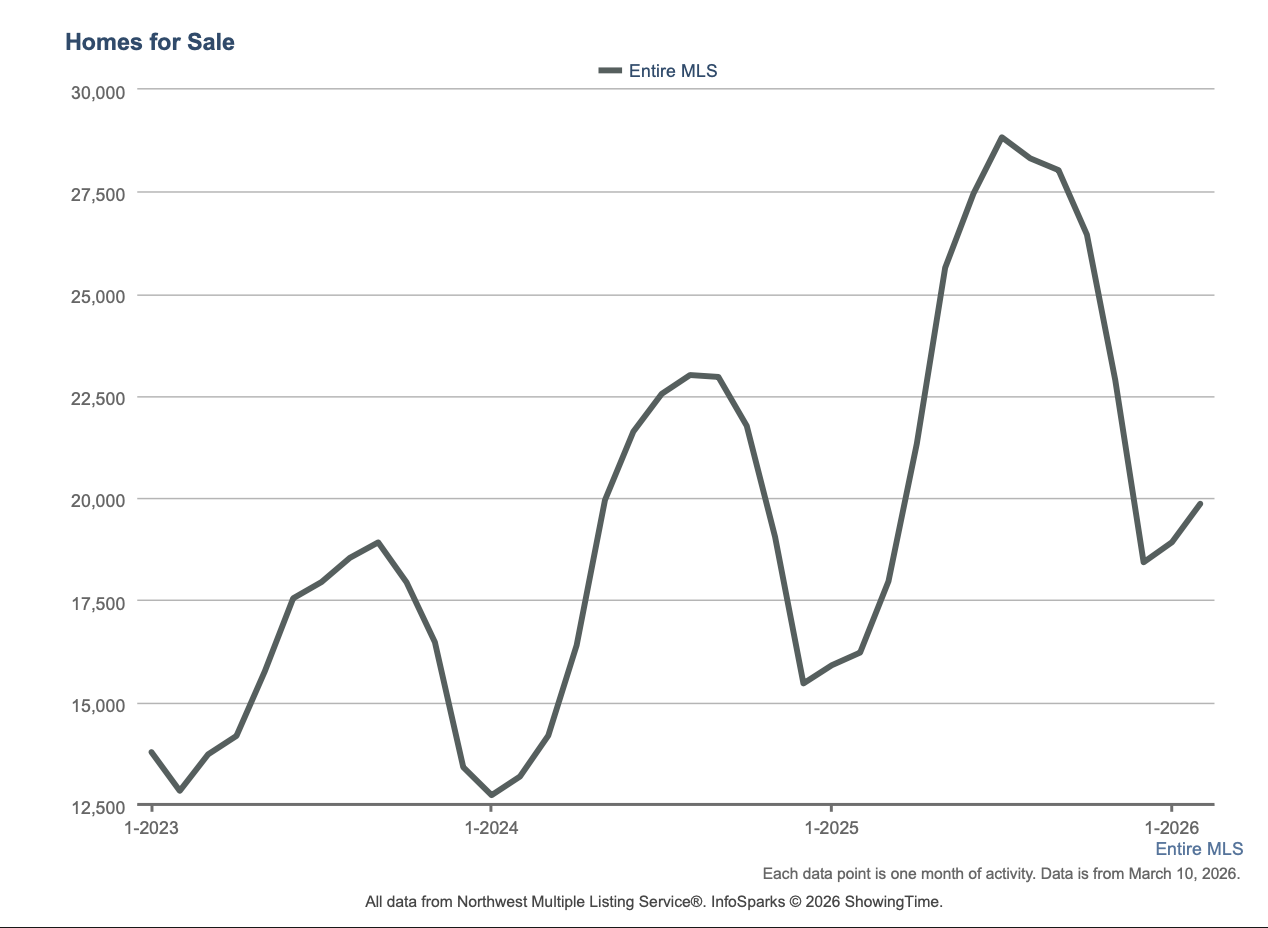 Inventory is typically lowest during the winter months and begins rising as we approach spring.
Listings tend to increase steadily from March through May as more homeowners decide to sell. The number of homes available usually peaks in late spring or early summer before gradually declining through fall and winter.
One trend that stands out over the past few years is that each year’s peak inventory has been higher than the previous year. This suggests more homeowners are choosing to move forward with selling rather than waiting on the sidelines.
For buyers, this means the largest selection of homes usually appears in late spring and early summer.
For sellers, it also means there may be more competition, making pricing strategy and presentation especially important.
Median Sale Prices
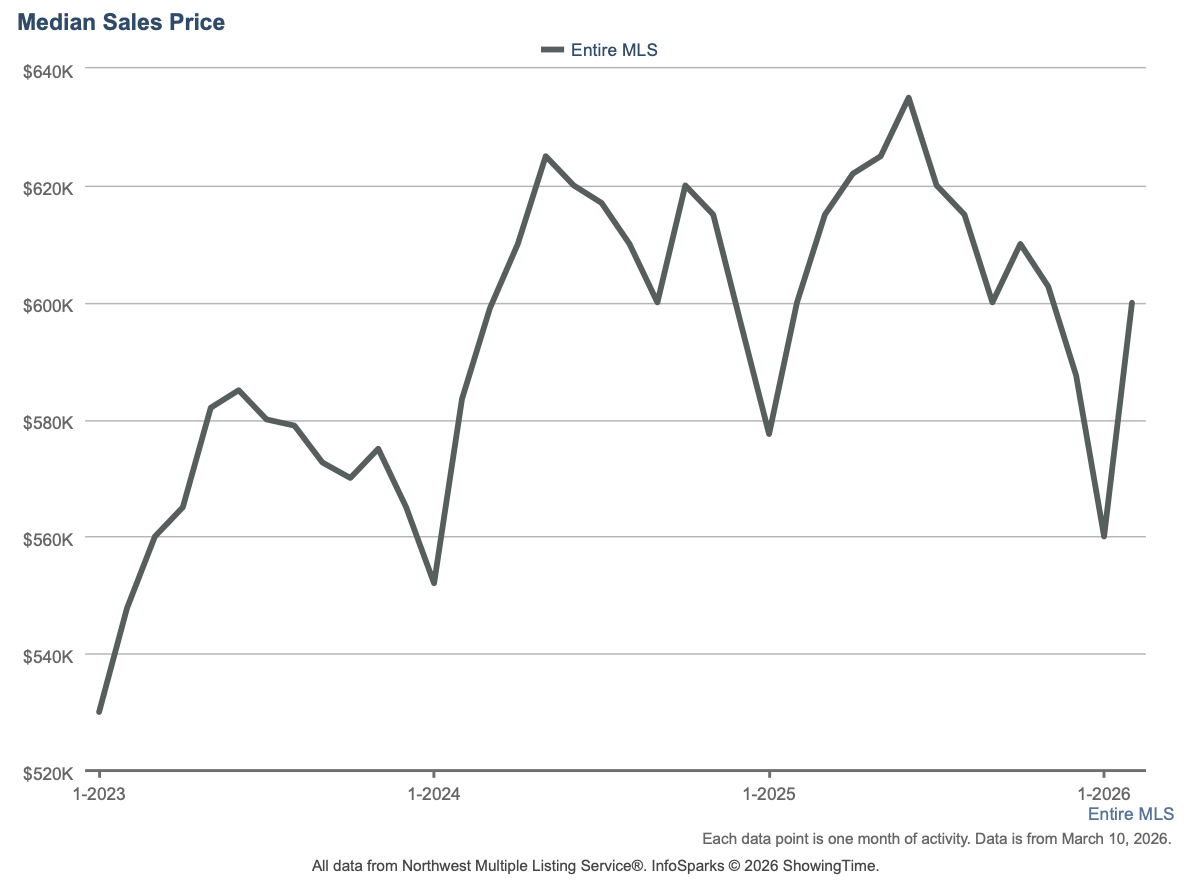 Home prices also tend to follow a seasonal pattern.
Prices usually begin rising in early spring as buyer activity increases. In many years, median sale prices reach their highest point in late spring or early summer when demand is strongest.
As the market moves into fall and winter, prices often stabilize or soften slightly as the pace of the market slows.
Although economic factors such as mortgage rates can influence pricing year to year, the general seasonal trend remains fairly consistent.
For sellers, listing during the peak spring market can often provide the strongest pricing opportunities.
For buyers, competition during these months may be higher.
Days on Market
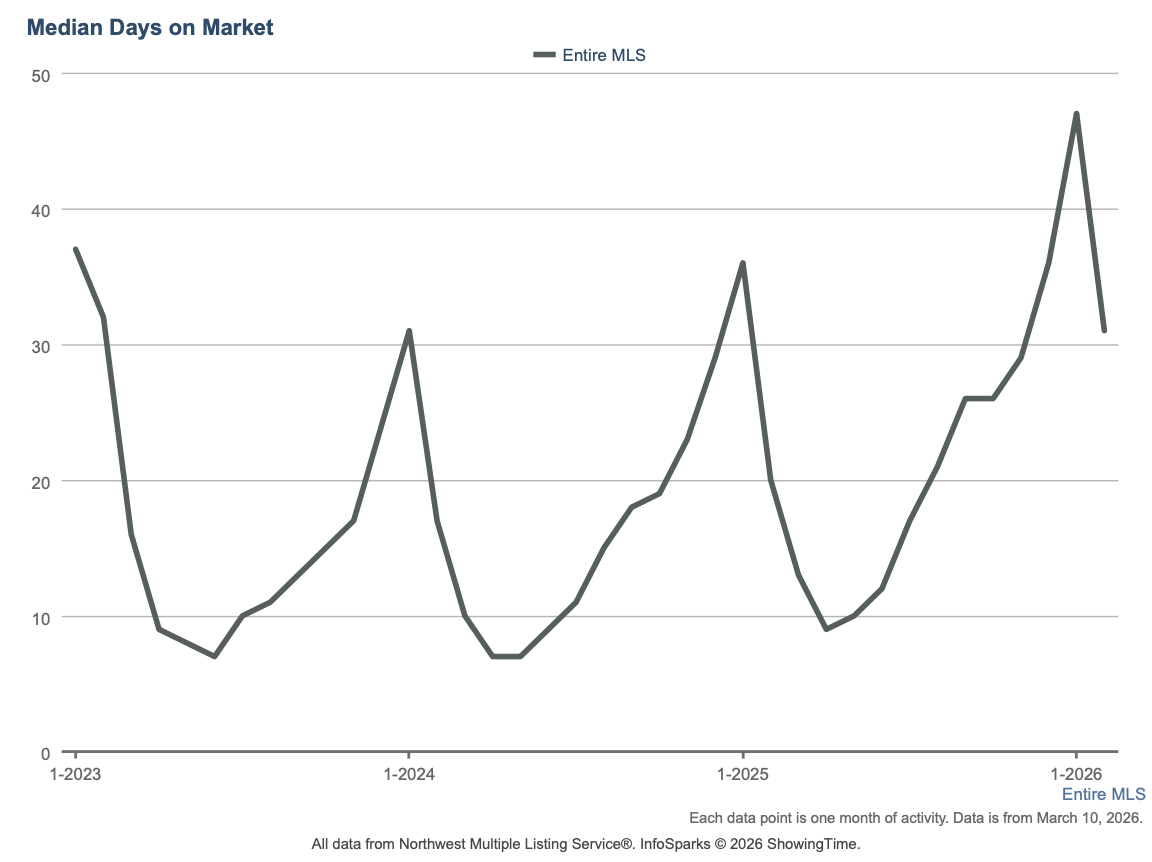 Days on market measures how quickly homes are selling.
Homes typically sell the fastest during the spring market when buyer demand is strongest. During this time, some homes can sell within days of hitting the market.
As the year progresses and activity slows, homes often take longer to sell. Winter months tend to have the longest days on market as both inventory and buyer activity decline.
When market times increase, buyers may have more time to evaluate homes and negotiate terms.
What Drives Seasonal Trends in the Housing Market
Several factors influence why the housing market follows this cycle each year.
School calendars
Many families prefer to move during the summer to avoid disrupting the school year. This increases both buyer demand and seller activity in the spring market.
Weather and longer days
Homes generally show better in spring and summer when landscaping is in bloom and daylight hours are longer, making it easier for buyers to tour homes.
Job relocations and hiring cycles
Major employment hubs such as Seattle and Bellevue often see hiring waves in the first half of the year, which can increase housing demand.
New construction releases
Developers frequently release new homes or complete projects during peak buying seasons, which can increase inventory in the spring and early summer.
Mortgage rates and economic factors
Interest rate changes can amplify or soften seasonal trends by affecting affordability and buyer demand.
Month-by-Month Housing Market Expectations
January – February
Inventory is typically at its lowest during these months. Buyers who remain active during this time often face less competition, which can provide opportunities for negotiation.
Sellers may experience longer market times and should focus on competitive pricing and strong presentation.
March – June
This is the most active period of the housing market.
New listings increase significantly, buyer activity picks up, and homes often sell quickly. Prices frequently reach their seasonal highs during this window.
For sellers, this period often offers the largest audience of buyers. For buyers, preparation is important because competition can be stronger.
July – August
The market remains active but may begin to stabilize slightly as summer travel increases.
Buyers can still find a good selection of homes, and some properties that didn’t sell during the spring rush may become more negotiable.
September – October
Activity typically slows from the summer peak.
Some sellers who missed the spring market list their homes during this time. Buyers may find opportunities as sellers become more motivated to close before the end of the year.
November – December
These months are generally the quietest time of the year in the housing market.
Inventory and showings are usually lower, but serious buyers and motivated sellers can still create opportunities for successful transactions.
Best Time to Sell a Home
Historically, the strongest window for sellers is late spring, typically between April and June.
During this period:
-
Buyer demand is high
-
Homes sell faster
-
Pricing is often strongest
-
Listings receive maximum exposure
However, preparation still matters. Homes that are properly priced, well presented, and professionally marketed tend to perform best.
Best Time to Buy a Home
Buyers may find certain advantages during the fall and winter months, typically October through February.
During slower market periods buyers may experience:
-
Less competition
-
More negotiating power
-
Motivated sellers
-
Longer days on market
Although inventory may be lower, opportunities can still appear for buyers who remain active during these months.
Insights for Real Estate Investors
Investors often pay close attention to seasonal market shifts.
Periods when homes stay on the market longer—typically late fall and winter—can create opportunities to negotiate favorable purchase terms.
Some investors aim to purchase during slower market periods and position properties for resale during stronger spring markets when demand is highest.
Final Thoughts
While the housing market can shift from year to year depending on interest rates and economic conditions, the seasonal rhythm tends to remain remarkably consistent.
Inventory, pricing strength, and buyer competition all tend to rise during the spring market before easing toward the end of the year.
Understanding these patterns can help buyers, sellers, and investors make more informed decisions about when to enter the market.
If you're considering buying or selling a home in the Greater Seattle area and want to understand what these trends mean for your specific neighborhood, feel free to reach out. I'm always happy to walk through the latest data and help create a strategy that aligns with your goals.