
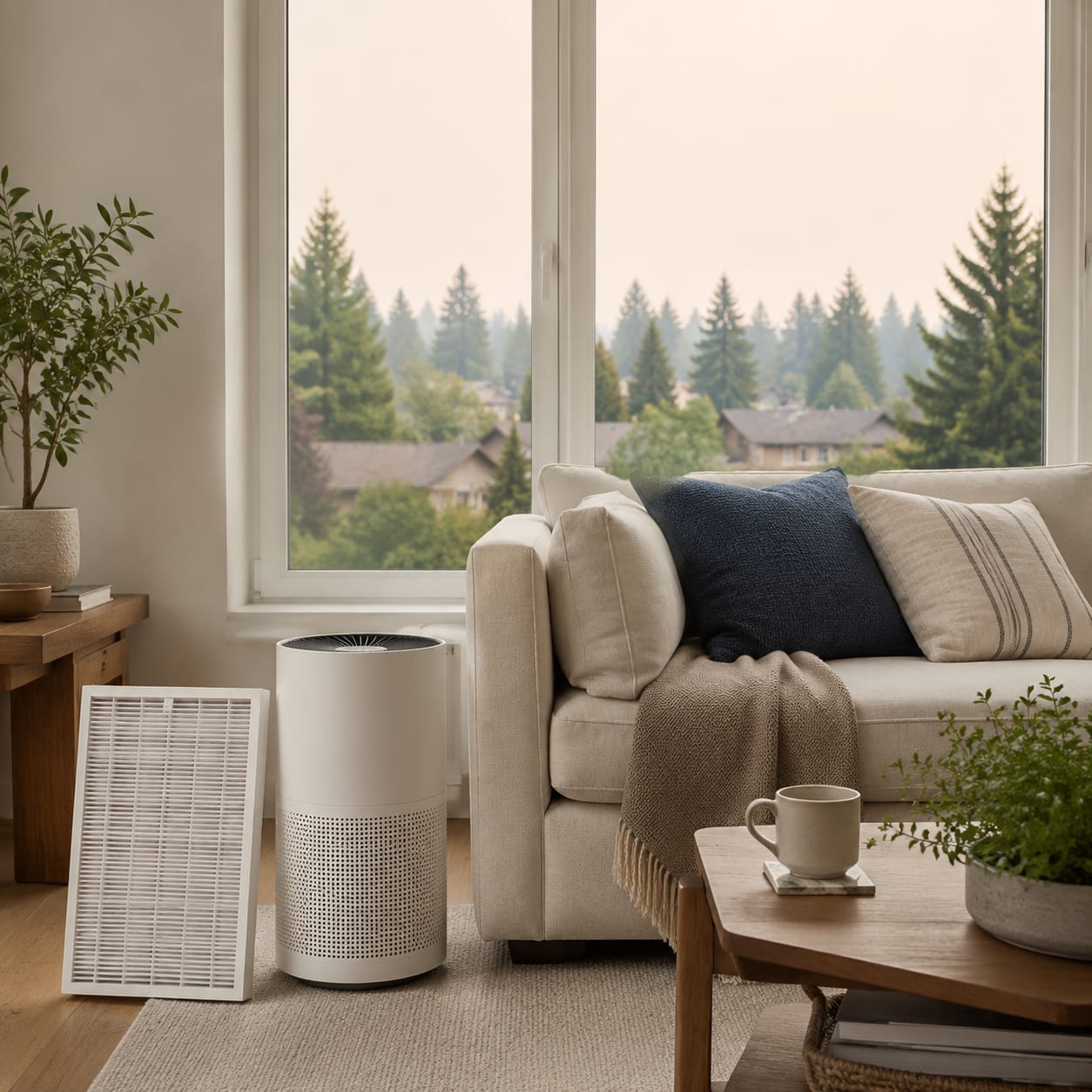

How to Prepare Your Home for Smoke Season
Last week, an outdoor movie night we planned to attend was canceled because of poor air quality.
It was disappointing, but also a reminder of how quickly wildfire smoke can change our plans here in the Pacific Northwest. The air can look clear in the morning and become unhealthy by the afternoon.
Most of us remember to check the air quality once the sky turns hazy. Preparing your home before the smoke arrives, however, can make it much easier to maintain cleaner indoor air.
Check Your HVAC Filter
Start by checking the filter in your heating and cooling system.
The EPA recommends using a MERV 13 filter, or the highest-efficiency filter your system can safely accommodate. Not every system is designed for the same filter, so check the manufacturer’s guidance or ask an HVAC professional before making a change.
It is also helpful to keep a replacement filter available. Filters can become dirty more quickly during prolonged smoke, reducing their effectiveness.
When outdoor air is smoky, run the system in recirculation mode if that option is available. If your air conditioner brings in fresh outdoor air, close the intake when possible.
Create a Cleaner-Air Room
Choose one room where your household can spend time when the air quality is poor. A bedroom or living room with fewer windows and exterior doors usually works well.
Keep the windows and doors closed and run a properly sized portable HEPA air cleaner continuously. Check the manufacturer’s recommended room size before purchasing one, and avoid air cleaners that intentionally produce ozone.
Closing the house is helpful during smoke, but indoor temperatures still need to remain safe. If your home becomes too hot, consider spending time in a public building with air conditioning and filtered air.
Reduce Indoor Air Pollution
When smoke is already affecting the air outside, everyday activities can make the indoor air worse.
During a smoke event, try to avoid:
Burning candles or incense
Using a wood-burning fireplace
Smoking indoors
Frying or broiling food
Unnecessary vacuuming
Using products that intentionally generate ozone
These activities either create additional particles or stir settled particles back into the air.
Check for Obvious Air Leaks
Smoke can enter through gaps around doors, windows, vents, and older weatherstripping.
You do not need to completely seal your home, but replacing worn weatherstripping and addressing obvious gaps can help reduce the amount of outdoor air entering the house. These small improvements may also make the home more comfortable and energy-efficient throughout the year.
Consider a Portable or DIY Air Cleaner
Portable HEPA air cleaners work best when they are appropriately sized for the room and operated continuously with the windows and doors closed.
If a commercial air cleaner is unavailable, the EPA and Puget Sound Clean Air Agency provide instructions for making a filter fan with a MERV 13 filter and a newer box fan.
Use only a certified box fan with a UL or ETL marking, ideally manufactured in 2012 or later. Keep the fan clear of obstructions, follow the official assembly instructions, and replace the filter when it becomes dirty.
Know Where to Check the Air Quality
Smoke levels can change throughout the day and vary from one neighborhood to another. The sky’s appearance and the smell of smoke are not reliable enough on their own.
Check the AirNow Fire and Smoke Map or the Puget Sound Clean Air Agency before exercising outside, opening windows, or planning an outdoor activity.
People with asthma, heart or lung conditions, and other health concerns may need to take additional precautions. Follow the advice of your healthcare provider when air quality is poor.
A Simple Smoke-Season Checklist
Before the next smoky day:
Check your HVAC filter
Confirm which filter your system can safely use
Keep a replacement filter available
Choose a cleaner-air room
Test your portable air cleaner
Replace worn weatherstripping
Save trusted air-quality websites
Keep a few properly fitting N95 masks available
A little preparation will not eliminate every particle, but it can help you respond more comfortably when conditions change.
Last week’s canceled movie night was a good reminder that smoke does not always give us much notice. Preparing the house ahead of time means one less thing to figure out when it returns.
Kim & Joel
JR Group WA
Real Estate, Thoughtfully Guided.
Sources: Washington State Department of Health, Puget Sound Clean Air Agency, EPA Indoor Air Filtration guidance, updated July 28, 2026, and AirNow.